

Let’s talk Yule/Winter Solstice vs. Jül, because folks throw these words around like they’re interchangeable, but they’re not twins—they’re cousins who took very different life paths.
Yule (Anglo-Saxon / English Pagan Context)
- Etymology: From Old English ġēol or ġeohhol, referring to a midwinter festival
- Region: Pre-Christian Anglo-Saxon England, later absorbed into Christian “Christmastide”
- Timing: Tied loosely to Winter Solstice and the darkest time of the year, but not fixed to a date
- Themes:
- Return of the sun
- Honor to ancestors and gods
- Sacred fire, feasting, protection rituals
- Wild Hunt, spirit activity, darkness giving way to light
- Modern Usage: Popularized in Wiccan and neopagan circles, often celebrated on or around Dec 21 (solstice), with a heavy solstice-focus
So basically, Yule as most folks say it today has been filtered through a neopagan lens, pegged to the calendar solstice, and often blends Celtic, Germanic, and New Age elements depending on who’s stirring the pot.
Jül / Jól (Old Norse / Scandinavian Pagan Context)
- Etymology: Old Norse jól, plural; used in sagas, runestones, and skaldic poetry
- Region: Scandinavia—Norse cultures, Iceland, Denmark, Norway, Sweden
- Timing: Not the solstice.
- Traditionally tied to the lunar calendar: the first full moon after the first new moon following the Winter Solstice
- Which puts Jul in January, often late January
- Themes:
- Sacrifice (blót) to the gods and ancestors
- Feasting, drinking, oaths, honoring the dead
- Sacred hospitality, gifting, community bonds
- The “Yule Boar,” the “Sun’s return,” and intense ancestor work
- Christian Survival: In Scandinavia today, Jul is the word for Christmas—but don’t let that fool you; its roots are blood-soaked, moon-bound, and spirit-driven.
So What’s the Difference?
| Attribute | Yule | Jul / Jól |
| Origin | Anglo-Saxon / Wiccan / English | Norse / Scandinavian |
| Timing | Winter Solstice (~Dec 21) | Full moon after the new moon post-solstice (often mid-late Jan) |
| Focus | Solstice, light return, rebirth | Ancestor sacrifice, oaths, moon cycles |
| Modern Use | Widely used in neopagan traditions | Still called “Christmas” in Scandinavia, but historical Jul was ritual-heavy and lunar-based |
If you’re walking an Anglo-centric neopagan path, following the solstice-based Yule makes sense—it honors the sun’s return, it’s tidy on the calendar, and it syncs with modern celebrations.
But if you’re walking the Old Norse path, like we do, you might want to keep Solstice and Jul separate:
- Celebrate Solstice on Dec 21 with fire and sun-return rituals
- Celebrate Jul in mid-to-late January, with oaths, ancestor feasting, and a big damn blót
It gives your year two deep midwinter rites instead of one.
One to honor the cosmos.
One to honor the blood.
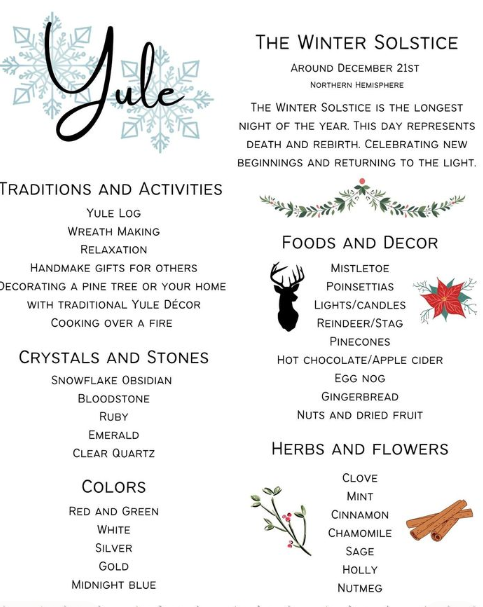
Recommendations for Ritual/Celebration
Winter Solstice Ritual
- Date: December 21 (Northern Hemisphere) — the official day of the Winter Solstice.
- Focus: This is for the solar turning‑point: the longest night, the sun beginning its return.
- Suggested activities:
- Light your sacred fire or candles in the evening
- Offer to your ancestors, land spirits, guides
- Cleanse and bless your space/walls/doors
- Sit in darkness for a moment & listen
- Why it matters: It lays the foundation for the season. It’s not “Jul” yet — it’s the turning point. You said you wanted to mark it separately; this is the moment.
Jül Ritual (Lunar‑Based)
- How to pick your date: According to some scholarly sources, traditional Jól (Jul) in the Scandinavian/Norse tradition falls on the first full moon after the first new moon following the Winter Solstice.
- Example: For 2025, if the Winter Solstice is Dec 21, you find the next new moon after that, then the full moon after that new moon.
- (You’ll need a moon phase calendar for your locale.)
- Focus: This ritual is for deeper themes: ancestor honoring, oaths/blóts, community bonds, moon magic.
- Suggested activities:
- At the full moon: perform a blót or offering to gods/ancestors
- Cast runes or do divination for the coming year
- Feast together with elements of your tradition (herbs, meats, roots, whatever your animistic practice honours)
- Share stories of your ancestors, light a special candle, maybe tie in the beading/skull work you do as part of the ritual art
- Set intentions (not just resolutions) — oaths aligned with your path as Seiðr & Gothi
- Dec 21: Solstice ritual. Solar turning, light & dark boundary crossing.
- Then: New moon follows. Wait for it.
- At the next full moon after that new moon: You do your Jul ritual.
Whether you follow Yule by the turning sun or Jül by the moon’s rhythm, what matters is that you make it yours. Rooted in spirit.
Guided by intention.
Anchored in something older than calendars and consumerism.
My husband and I walk this path to honor our ancestors and protect what is sacred—through ritual, remembrance, and the fire that never goes out.
However you choose to celebrate, know this: you are not alone in the dark.
The spirits are watching, the wheel is turning, and the old ways are still very much alive.
From our hearth to yours—blessings on your Yule, your Jül, and all the wild magic in between.
Mama Sha’, Mr. Kelly & all the critters at Inexplicable Things!
 Inexplicable Things Blog
Leave a comment